





Introduction
Interest in so-called “brain vitamins” has grown rapidly over the past decade. From students facing academic pressure to professionals managing cognitive fatigue, many people are searching for safe, non-prescription ways to support focus, memory, and mental stamina. Products like NZT-48 often appear in these conversations, positioned as advanced supplements rather than traditional multivitamins.
This article explores brain vitamins like NZT-48 in a clear, evidence-based way. We’ll explain what these products are, how they differ from standard supplements, what science actually supports, and where realistic expectations should begin and end.
What are “brain vitamins”?
The phrase brain vitamins is not a formal medical term. Instead, it’s a consumer label used to describe supplements designed to support cognitive processes such as attention, memory, mental clarity, and resistance to fatigue.
Unlike single-nutrient vitamins, these formulations usually combine multiple compounds. They may include amino acids, plant extracts, choline sources, and micronutrients thought to influence neurotransmitters or cerebral metabolism. In practical settings, clinicians often observe that people turn to these supplements during periods of stress, sleep disruption, or sustained mental workload rather than for diagnosed neurological disease.
Where NZT-48 fits into the picture
NZT-48 is commonly discussed as a next-generation cognitive supplement rather than a basic vitamin product. It is frequently grouped within the broader category of nootropics—substances intended to support cognitive performance without the regulatory status of prescription medications.
People typically encounter NZT-48 while researching advanced brain supplements or when comparing different ways to enhance focus and mental endurance. Those interested in learning more about the product itself often begin by exploring options to Buy NZT-48 and then assessing how it compares with other cognitive aids.
How brain vitamins like NZT-48 are formulated
Most advanced brain supplements follow a multi-pathway design philosophy. Instead of relying on a single active ingredient, they aim to influence several aspects of brain function at once.
Common formulation goals include:
- Neurotransmitter support: Ingredients linked to acetylcholine, dopamine, or other signaling systems involved in attention and learning.
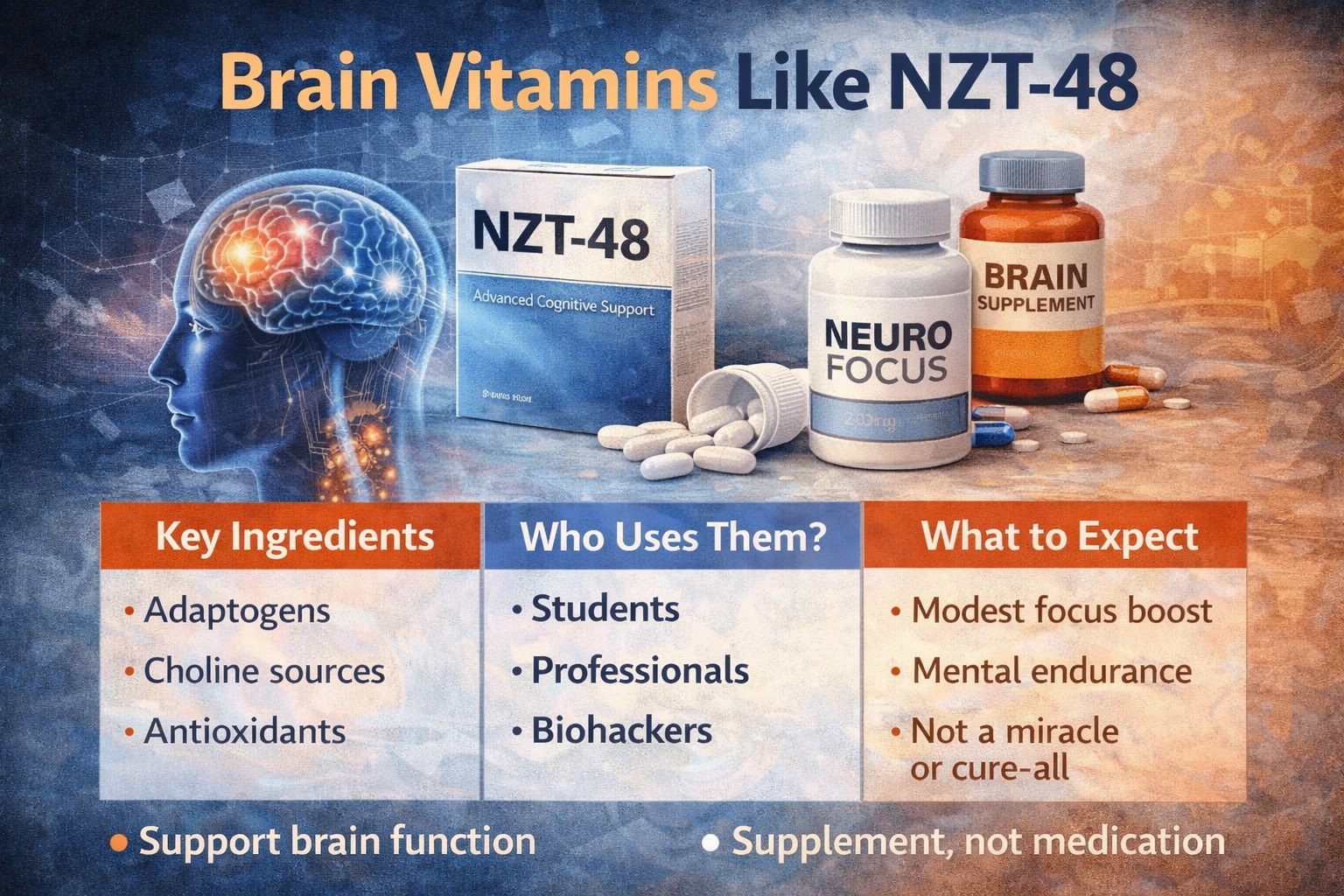
- Stress adaptation: Botanical compounds often described as adaptogens, intended to help the brain cope with psychological or physiological stress.
- Energy metabolism: Nutrients involved in mitochondrial function and glucose utilization, supporting sustained mental effort.
- Neuroprotection: Antioxidants aimed at reducing oxidative stress in neural tissue.
The rationale is that modest effects from individual components may add up when combined thoughtfully. However, this complexity also makes these products harder to evaluate in large, controlled clinical trials.
The science behind cognitive supplements
Scientific evidence for brain vitamins exists on a spectrum. Some nutrients are clearly essential for normal brain function, while evidence for cognitive enhancement in healthy adults is far less definitive.
According to the National Institutes of Health (NIH), deficiencies in certain nutrients—such as B vitamins—can impair cognitive function, and correcting those deficiencies can restore normal performance. However, the NIH also emphasizes that evidence for boosting cognition beyond normal levels in healthy individuals is mixed and often limited
(https://ods.od.nih.gov/factsheets/CognitiveFunction-HealthProfessional/).
This distinction matters. Supporting brain health is not the same as dramatically increasing intelligence, memory capacity, or creativity.
NZT-48 and the influence of CPH4
One reason NZT-48 attracts attention is its association with the fictional compound CPH4, popularized through movies and online discussions. While CPH4 itself has no basis in real pharmacology, the concept has shaped how people think about multi-ingredient cognitive enhancers.
Discussions around NZT-48 and CPH4 often clarify this gap between fiction and reality. NZT-48 does not unlock unused portions of the brain or produce instant genius. Instead, it reflects an attempt to combine known nootropic strategies into a single supplement, inspired more by theory than cinematic myth.
Brain vitamins vs prescription cognitive enhancers
As people research brain vitamins, comparisons with prescription medications are almost inevitable. This is where differences in regulation, mechanism, and risk become especially important.
Prescription drugs are approved to treat specific medical conditions and undergo extensive clinical testing. Supplements, by contrast, are regulated as foods in many regions and cannot legally claim to diagnose, treat, or cure disease.
Some individuals researching supplements also look into pharmaceutical options such as Modafinil, a prescription wakefulness-promoting agent. While both supplements and prescription drugs may be discussed in the same forums, they operate in very different regulatory and medical contexts. Combining or substituting these approaches should always involve professional medical advice.
Who typically uses brain vitamins?
Patterns of use tend to cluster around specific groups:
- Students during exams or intensive study periods
- Professionals in cognitively demanding fields such as technology, finance, or healthcare
- Shift workers dealing with irregular sleep schedules
- Biohackers experimenting with performance optimization strategies
Clinicians often observe that perceived benefits are greater in people who are fatigued, sleep-deprived, or nutritionally marginal compared with those who already maintain optimal lifestyle habits.
Potential benefits and realistic expectations
Users of brain vitamins like NZT-48 often report subjective improvements such as:
- Better ability to sustain attention
- Reduced mental “fog”
- Improved mental endurance during long tasks
- Mild support for working memory
However, these effects are generally modest. There is no credible evidence that such supplements dramatically increase IQ, permanently enhance memory, or replace the need for sleep and recovery.
The U.S. Food and Drug Administration (FDA) cautions that dietary supplements are not approved in the same way as drugs and that consumers should be skeptical of claims promising guaranteed or extreme cognitive enhancement
(https://www.fda.gov/food/dietary-supplements).
Safety considerations
Brain vitamins are generally considered safe when used as directed, but they are not risk-free. Potential concerns include:
- Interactions with prescription medications
- Overlapping ingredients from multiple supplements
- Sensitivity to stimulating compounds
People with underlying medical conditions, those who are pregnant, or individuals taking prescription drugs should consult a healthcare professional before starting any new supplement.
Brain vitamins and lifestyle context
One of the most consistent findings in cognitive and sleep research is that supplements work best as adjuncts—not replacements—for healthy habits. Adequate sleep, regular physical activity, stress management, and balanced nutrition remain the foundation of brain health.
In real-world practice, clinicians often see better outcomes when individuals address these fundamentals first and then use supplements selectively rather than relying on pills alone.
Are brain vitamins right for everyone?
Not necessarily. For people with diagnosed neurological or psychiatric conditions, supplements are not substitutes for evidence-based medical treatment. For healthy adults, benefits may be subtle and vary widely between individuals.
An informed decision involves understanding both the potential upsides and the clear limitations of products like NZT-48.
Conclusion
Brain vitamins like NZT-48 occupy a middle ground between basic nutrition and prescription cognitive enhancers. They are designed to support mental performance through combinations of nutrients and bioactive compounds, not to deliver dramatic or permanent cognitive transformation.
When used responsibly and with realistic expectations, they may offer modest support for focus and mental endurance—particularly during periods of high cognitive demand. Ultimately, they work best as part of a broader approach that prioritizes sleep, nutrition, and overall health.
Medical Disclaimer
This content is for informational purposes only and does not replace professional medical advice. Always consult a qualified healthcare provider before starting or changing any supplement regimen.